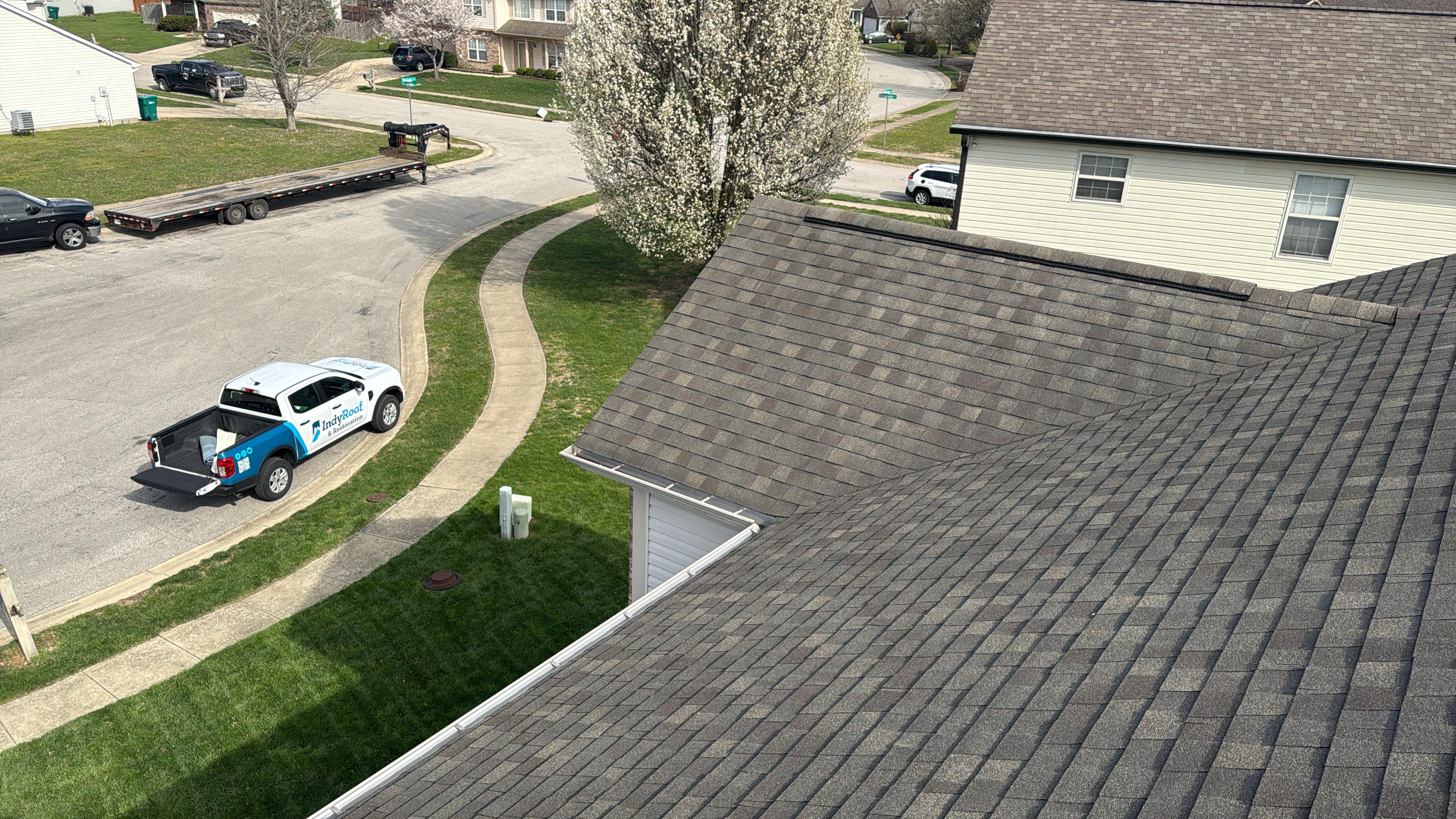
Problem: You Do Not Know How Old Your Roof Is
Many Crooked Stick homeowners inherit a roof when they buy the house and have no idea how old it is, which makes planning impossible. The fix is to gather what clues you can and have it inspected. Closing documents, permit records, or a previous owner may pin down the install date. Failing that, a roofer can estimate the age and remaining life from the material, the wear, and the condition of the shingles and flashing. Pair the estimated age against the typical range for the material, and you have a realistic sense of how much time is left and when to start budgeting for a replacement rather than being caught off guard by a sudden failure.
Problem: Granules Are Collecting in the Gutters
You clean the gutters and find them full of what looks like coarse sand, and that is a meaningful sign on an asphalt roof. Those are the protective granules that shield the shingle mat from the sun, and heavy shedding means the shingles are wearing out. A little granule loss is normal, especially on a new roof, but steady accumulation on an older roof points toward the end of its life. The fix is an inspection to gauge how far along the wear is. If the shingles are broadly thinning and the roof is near its typical age range, this is often an early warning that replacement is approaching, and it is better to plan for it than to wait for leaks.
Problem: Your Neighbor's Roof Failed and You Are Worried
A roof on your street gets replaced and you wonder whether yours is next. Roofs in the same neighborhood often share an age and have faced the same weather, so the concern is reasonable, but the answer still depends on your roof specifically. Material, install quality, ventilation, and maintenance all differ house to house even on the same block. The fix is an inspection of your own roof rather than a decision based on the neighbor's. If yours is the same material and age and shows similar wear, planning ahead is wise. If it is a different material or in better shape, you may have years of life the neighbor's roof did not.
Problem: You Are Torn Between Two Materials
Replacement is coming and you are stuck between, say, architectural asphalt and metal, unsure whether the longer lasting option is worth the higher price. The way to break the tie is to look past the sticker price to cost over time and to your plans for the home. Asphalt costs less now and lasts twenty five to thirty years, while metal costs more but runs forty to seventy, so the cost per year can favor metal if you stay long enough to use that life. The fix is to have a Crooked Stick roofer price both options and lay out the lifespan and cost over time of each, then match the choice to how long you intend to own the home. That turns a vague preference into a clear, numbers based decision.
Problem: You Want the Longest-Lasting Roof Possible
Some homeowners plan to stay for decades and want a roof they will not have to think about again. For maximum lifespan, the materials to weigh are metal, tile, and slate, which run from forty years to over a hundred. The tradeoffs are upfront cost and, for tile and slate, weight that the structure must support. Synthetic slate and shake offer much of the longevity at lighter weight. The fix is to match the material to how long you actually plan to stay and what the home can carry. For a Crooked Stick homeowner committed to the long term, paying more upfront for a metal, tile, slate, or synthetic roof can mean never replacing it again.
Problem: Your Roof Aged Faster Than Expected
An asphalt roof that should have lasted twenty five years is failing at fifteen, and the obvious question is why. Premature aging almost always traces to one of a few causes: poor attic ventilation that baked the shingles from below, a substandard installation, or relentless sun and storm exposure. Sometimes a layover, where the shingles were installed over an old layer, trapped heat and shortened the life. The fix going forward is to address the root cause when you replace the roof, especially ventilation, so the next roof reaches its full range. An inspection can identify what cut the life short, which turns a frustrating early failure into a lesson that protects the replacement.
Problem: Your Roof Looks Fine but Is Getting Old
The roof has no leaks and looks acceptable from the ground, yet you know it is approaching the end of its material's typical range, and you are unsure whether to act. Appearances can be misleading, since significant wear, hidden leaks, and deterioration of the underlayment or flashing are not visible from below. A roof can be closer to the end than it looks. The fix is a professional inspection that examines the surface and the condition underneath rather than relying on a ground level glance. If the roof is sound, you get peace of mind and a timeline. If it is further along than it appears, you can plan a replacement on your own schedule instead of waiting for the first leak to force the issue. Rather than a single number, a roof's lifespan varies with these factors, and a professional can assess where yours stands. A professional inspection can help you understand the condition of your roof and how much service life may remain. Choosing a durable material and ensuring quality installation, along with regular maintenance, supports a longer lasting roof for your home. For a clear sense of your roof's expected lifespan and current condition, a professional assessment is the dependable guide. The actual lifespan of a given roof depends on the material, the installation, the climate, and how well it is maintained, so these factors all play a role. Because maintenance supports longevity, keeping the roof cared for helps it reach its expected service life. Rather than a single number, a roof's lifespan varies with these factors, and a professional can assess where yours stands. A professional inspection can help you understand the condition of your roof and how much service life may remain. Choosing a durable material and ensuring quality installation, along with regular maintenance, supports a longer lasting roof for your home. For a clear sense of your roof's expected lifespan and current condition, a professional assessment is the dependable guide.
Problem: You Are Not Sure Whether to Repair or Replace
The roof has a problem, and the real question is whether to patch it or replace the whole thing. Age is the deciding factor. A sound repair makes sense on a roof with years of life left, but pouring money into repairs on a roof near the end of its range is usually throwing good money after bad, since the next failure is rarely far behind. The fix is to weigh the roof's age against the typical lifespan for its material and to factor in how many problem areas there are. A Crooked Stick roofer can give an honest read on whether a repair will hold or whether replacement is the smarter spend.